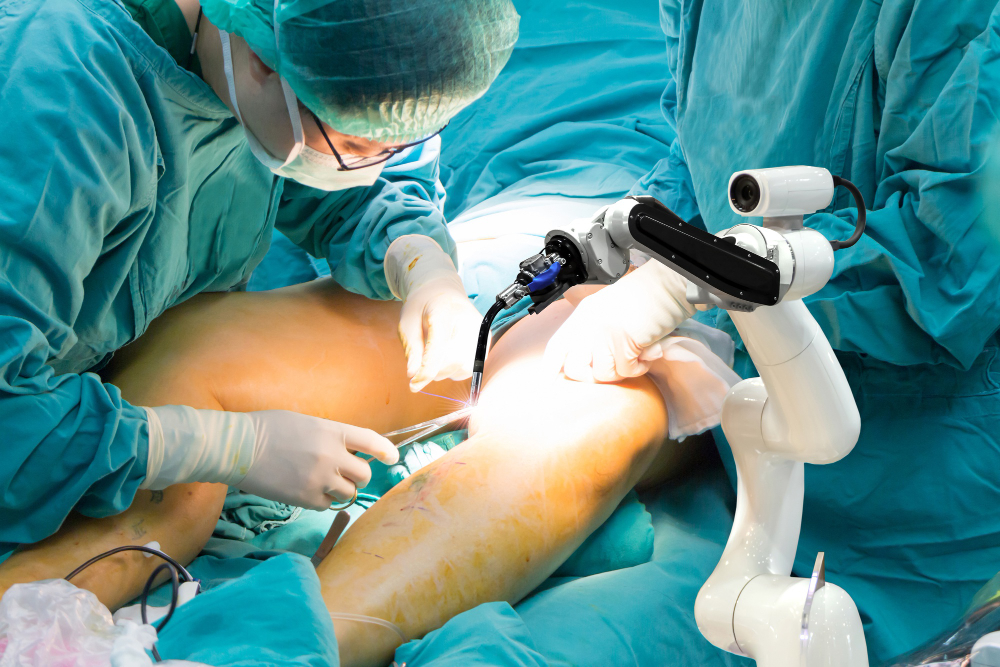
ROBOTIC Knee Joint Replacement is a modern surgery that uses advanced robotic technology to help replace damaged knee joints. This method offers better accuracy and faster recovery compared to traditional knee replacement. Many people search for the latest knee replacement technology and want to know about robotic knee surgery recovery. In this blog, you will learn what ROBOTIC Knee Joint Replacement is, who may need it, its benefits, the procedure, recovery tips, and more.
What is ROBOTIC Knee Joint Replacement?
ROBOTIC Knee Joint Replacement is a type of knee surgery. It uses a robotic system to help the surgeon remove damaged parts of the knee and place a new artificial joint. The robot does not work alone. Instead, it guides the surgeon’s hand for better accuracy. Because of this, the surgery can be more precise than traditional methods. According to the American Academy of Orthopaedic Surgeons, robotic systems help plan and perform the surgery with great detail. This technology is becoming popular in many cities for knee replacement.
Who Needs ROBOTIC Knee Joint Replacement?
Not everyone with knee pain needs this surgery. However, some people may benefit more from a robotic approach. You may need ROBOTIC Knee Joint Replacement if:
For older adults or those with active lifestyles, this surgery can help restore movement and reduce pain. Always talk to your orthopedic specialist to see if you are a good candidate.
Benefits of ROBOTIC Knee Joint Replacement
There are many reasons why people choose robotic knee surgery. Some key benefits include:
According to recent studies in orthopedic journals, robotic surgery often leads to better results and higher patient satisfaction. In many cities, hospitals now offer this advanced option for knee replacement.
How the Procedure Works
ROBOTIC Knee Joint Replacement follows a step-by-step process. Here is what usually happens:
Because the robot helps with planning and movement, the surgery is often safer and more accurate. The whole process usually takes a few hours.
Recovery and Rehabilitation
After surgery, recovery is very important. Most people stay in the hospital for one to three days. However, some may go home the same day. Here is what you can expect during recovery:
Following your doctor’s advice and doing your exercises will help you heal faster. In many cases, people report less pain and better movement after robotic knee surgery.
Risks and Considerations
Like all surgeries, ROBOTIC Knee Joint Replacement has some risks. These can include:
However, robotic surgery often lowers these risks because of its accuracy. Still, it is important to talk with your doctor about your health and any concerns. The World Health Organization and CDC recommend choosing a hospital with skilled surgeons and good safety records.
Frequently Asked Questions
In summary, ROBOTIC Knee Joint Replacement is a safe and effective way to treat severe knee problems. It offers many benefits, including faster recovery and better movement. Consult Dr. Sukesh Reddy to learn if ROBOTIC Knee Joint Replacement is right for you.